
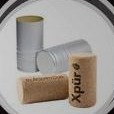
Pick by Aging Time: 3, 5, 10 or 30 Years
| Aging time | Our pick |
|---|---|
| 3 years | Neutrocork or Acquamark |
| 5 years | Xpür 44 mm or Twin Top |
| 10 years | Xpür 49 mm (7 to 10 years). Twin Top Evo (up to 7) sits between 5 and 10. |
| 30 years | NDtech 49 mm. And a challenge: will you remember what you paid for the cork 30 years from now? If you do, Joe's buying the beer. |
No plastic filler. None of our corks use plastic fillers.
A note on choosing corks for aging periods. Remember that bottling is a system, which depends on several factors. The highest rate of oxygen intrusion comes directly after the bottling itself. Your aging goal should be preservation or evolution. Use a closure with a predictable path to age your wines for the intended period.
Not sure? Tell us the wine, the bottle neck size, how long it will spend in bottle and your annual quantity on Get a Price, and we'll match the cork. Amorim can also calculate the right cork diameter from your bottle's neck profile.
Read this first. Every aging period on this page assumes three things:
- The wine is ready for bottling. Stable, clean, with free SO2 and dissolved oxygen where they belong for that wine.
- The winery bottles with a system that guarantees success. Low oxygen pickup, correct headspace and vacuum, clean and well-maintained corker jaws, corks stored and used the way Amorim specifies. See the Corking Checklist.
- Retailers and customers do their jobs. Cool, steady temperatures, sensible humidity, no sunlight or heat, and careful handling from the dock to the cellar.
If any one of these breaks down, no cork can deliver these numbers. They are estimates, not guarantees.
Aging Periods and Oxygen, Cork by Cork
The "Plan for" column is our conservative pick. Where Amorim's companies give more than one figure, we chose the shorter one. The one exception is Xpür 49 mm, explained below the chart.
| Cork | Type | Plan for | Oxygen in, running totalmg O2 per cork, from Amorim tech sheets |
|---|---|---|---|
| NDtech | Natural one-piece, each cork TCA tested | 10 to 20 years; 49 mm up to 30 | 2.6 at 2 years, 2.7 at 3 years, 2.8 at 5 years |
| Naturity | Natural one-piece | 10 to 20 years | Not on the sheet; the same natural cork as NDtech |
| Acquamark | Natural, water-based coating | Up to 3 years | Not published |
| Twin Top | Technical: agglomerate body, natural disk each end | Up to 5 years | 1.68 at 1 year, 1.73 at 2 years, 1.78 at 3 years |
| Twin Top Evo | Technical: micro-agglomerate body, natural disk each end | Up to 7 years | 1.11 at 3 months, 1.26 at 6 months, 1.34 at 1 year, then 0.03 per year |
| Xpür 44 mm | Micro-agglomerate, Xpür treated | Up to 5 years | 1.20 in the first 6 months; 0.07 from 6 months to 5 years |
| Xpür 49 mm | Micro-agglomerate, Xpür treated | 7 to 10 years | 1.10 in the first 6 months; 0.04 from 6 months to 5 years |
| Neutrocork | Micro-agglomerate | Up to 3 years | 1.2 at 1 year, 1.3 at 2 years |
Amorim Cork America gives one range for Xpür, 5 to 7 years. We split it by length. The 44 mm gets the conservative end. The 49 mm lets in less oxygen after bottling (0.04 vs. 0.07 mg), and based on that and our own experience with it, we plan it for 7 to 10 years. Amorim's sheets measure oxygen over different time spans, so compare the shape of the numbers, not one column against another. Want a 49 mm or 54 mm natural cork for long aging? Amorim recommends longer corks for wines that will age in the bottle (5).
What Amorim Says
Here is the wording behind each "Plan for" figure, quoted from Amorim's own companies.
| Cork | What Amorim says numbers refer to the sources below |
|---|---|
| NDtech | Natural cork: "long bottle aging potential" (1); vintage wines "with cellaring up to 30 years" (3) |
| Naturity | "The only true option for age-worthy wine" (4); "long bottle aging potential" (1); up to 30 years (3) |
| Acquamark | "Wines meant for early consumption" (1); "shelf life of 36 months" (3) |
| Twin Top | "Consumed within 5 years" (1); "not intended for long bottle ageing" (4) |
| Twin Top Evo | "Consumed within 5 to 7 years" (1); "up to 96 months" (4) |
| Xpür 44 mm | "Consumed in 5 to 7 years" (1) |
| Xpür 49 mm | "Consumed in 5 to 7 years" (1) |
| Neutrocork | "Consumed in 3 to 5 years" (1); "intended for early consumption" (4) |
How to Read the Oxygen Numbers
A cork holds air in its cells. Most of the oxygen a cork ever gives the wine comes out of the cork itself in the first months after bottling. After that, very little gets through. Amorim's long-term measurements show it clearly: a natural cork delivers about 2.5 mg of oxygen in the first year and only about 0.3 mg more over the next four years. Neutrocork delivers about 1.2 mg in the first year and about 0.2 mg more over the next four (6).
That's why a winemaker can plan around a cork: after the first year, the oxygen supply is low and steady. It's also why bottling matters more than most people think. Oxygen dissolved in the wine and trapped in the headspace at bottling adds to what the cork delivers (6). A sloppy bottling run can give a wine more oxygen than its cork lets in over all the years after the first.
Oxygen isn't the whole story for long aging, either. A wine you'll cellar for 10 or 20 years needs a cork that stays elastic and keeps its seal for that long, which is why Amorim calls one-piece natural cork the true option for age-worthy wine (4).
Screw Caps and Corks: Five Years of Oxygen
How much oxygen gets into the bottle, year by year, through two screw cap liners and Amorim corks. Notice the dark part of every bar: most of it comes in the first year.
Sources
- Amorim Cork America, product descriptions (amorimca.com/products).
- Amorim Cork technical sheets for each stopper, which ENOTOOLS keeps on file. Use the Request Tech Specs button on each product page for a copy.
- Amorim Cork South Africa, product range (amorimcork.co.za).
- Amorim Cork, product pages and technical sheets (amorimcork.com).
- Amorim Cork, Acquamark product page: "For wines which are to age in the bottle, we suggest the use of corks longer than what is normal."
- Amorim research presentation on closures and oxygen (2015), based on Lopes, P.; Saucier, C.; Glories, Y. J. Agric. Food Chem. 2005, 53, 6967-6973, and Lopes et al., J. Agric. Food Chem. 2007, 55, 5167-5170.
- Amorim Cork, Xpür technical sheet, "Oxygen Ingress: 60 month comparison between different closures." Method based on Lopes, P.; Saucier, C.; Teissedre, P.L.; Glories, Y. J. Agric. Food Chem. 2006, 54, 6741-6746. Validated by Campden BRI.