

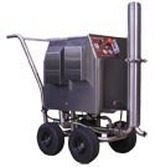
Ozone machines get talked about like a silver bullet. Truthfully, not much in the microbial realm survives contact with the right amount of ozone in water. But there's no substitute for good, sound procedures in a clean, safe facility. Things have to be clean first; sterile is second. Most often ozone is one part of a complete cleaning program, adding a safety margin for your tank room, bottling line, barrels and some process equipment.
One common barrel problem it helps with is Brettanomyces. Arguably some Brett in an otherwise fantastic wine is OK; when it's bad, it ruins the bottle. Ozone won't completely erase Brett in barrels, but it will keep the population under control in the winery. A barrel washing system made of a pressure washer, a barrel cleaning head and some ozone makes life easier.
A Word of Caution
Some machines are marketed with an outlet to pump ozone gas into a closed space. You've heard about the worker found at the bottom of a wine tank; that's usually CO2, and it's why tanks say "Danger: Confined Space." If you think CO2 is dangerous, research ozone gas. This very useful tool can be harmful or fatal if misused. Ventilate properly, work outdoors when you can, use ozone alarms indoors, and wear a mask approved for ozone. Deliberately gassing a container without water is potentially dangerous.
How Ozone Works
A generator pulls oxygen from the air through an electrical field that turns O2 into O3 (ozone). On our machine the gas then goes through an intercooler to increase its density, and is injected into the water you supply. The extra oxygen atom attacks the bacteria it touches, or breaks off and becomes harmless again after about twenty minutes. Ozone is the most reactive substance known: it makes chlorine bleach look like Kool-Aid.
What Really Matters
- The water carries the ozone. It should be cold and not under extreme pressure, so it can carry the ozone to what you're sanitizing. Hard impingement can separate the gas from the water.
- Contact time with the surface is the key to success.
- Design beats size. A machine that makes 16 trillion tons of ozone is useless if it can't embed that ozone in the water.
- Water quality counts. Water with a high bio-load defeats even the biggest machine.
With good water and a well-designed system, ozone concentration in the stream (not generator "size") gives the shortest contact time. There are bargain machines out there, but is the trade-off in contact time worth your extra labor and wasted water?
Our Ozone Machine
- Built on a Pacific Ozone platform
- Carlsen fabrication and electronics throughout
- Needs at least 5 GPM of water
- Likes a little back pressure and a high-flow, low-restriction spray ball
- We help design your ozone procedure and train you
- Two years of warranty and service