

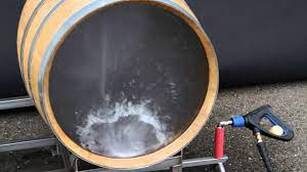
Three Steps to Healthy Barrels
- Clean it.
- Sanitize it.
- Refill it, or treat it for empty storage.
Before a barrel can be sanitized for reuse or treated for storage, it has to be clean. Keeping wine within safe parameters won't protect you from an existing infection in a dirty barrel. Dirty barrels hold skins, sediment, tartrates, and microbes, dead or alive and shielded by the solids.
Cleaning wood is easy. Sanitizing it is extremely challenging, and wood is never truly sanitary. The best you can do is knock down the existing population and keep new growth from spreading, and preserve the wood if the barrel will sit empty.
Step 1: Clean
| Method | How | Our take |
|---|---|---|
| Barrel washing head (Aaquablaster LT or 360) | Driven by a pressure washer at 2,500–3,600 PSI and at least 4.5–5 GPM, like our KEW Poseidon 7. Hot water preferred (tolerates 180 °F). | A very, very good solution. Blasts tartrates off barrels and small tanks in 3–5 minutes. Great with a tankless water heater. |
| Steam | 3–5 minutes at 40 PSI: melts tartrates, opens the wood pores, releases old wine. Cool rinse after. | Good to great. Cleans and sanitizes. |
| Spray ball and wand | Low pressure, high flow, pump driven, no pressure washer. Can draw from a tank of chemical mix; also good for ozone or percarbonate sanitizing. | Basic. Slower and less effective, relies on hot water and contact time. |
| Chemicals only | Skipping tartrate removal and relying on chemicals | We hate it. Chemicals don't mechanically clean wood, but they do strip good flavors. |
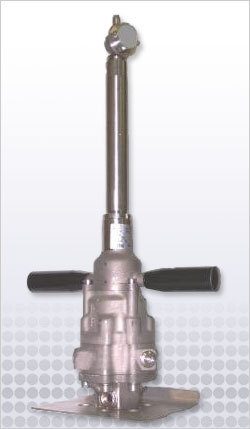
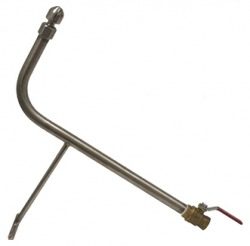
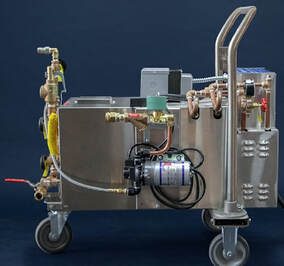
Watch the barrel washing head in action.
Step 2: Sanitize
- Ozone rinse after a hot water rinse, about 3 minutes. About ozone.
- Steam, as a cleaner and/or sanitizer. About steam.
- Sodium percarbonate soak (24–72 hours) followed by a citric acid rinse.
- Acid/SO2 soak ("pickling"): 3 lb tartaric acid (about pH 2.2) and ½ lb KMBS (about 500 ppm SO2) mixed in hot water in a 60-gallon barrel, topped and bunged, for 5 to 10 days.
Please keep in mind you'll never remove every microbe from the porous wood of a barrel. It's simply impossible to bring a barrel to zero. We're not here to tell you a little of this or that isn't a flaw, or that some imperfection isn't part of a wine's style. But there's a difference between a small beauty mark placed by an angel and a major cosmetic affront. Beauty is in the eye, nose and mouth of the beholder. What you can do is sanitize an already clean barrel to control what lives there before the next fill.
Step 3: Preserve It, or Refill It
Two ways to treat barrels for empty storage:
- Burn a sulfur wick every 30 days, or
- Use EBX Barrel Protect: a natural tannin spray that protects empty barrels for up to three months, sulfur free.