Springfield, Missouri · Serving the Midwest, Eastern and Western United States

Home › Blog › Page 4

What’s New at ENOTOOLS

News, straight talk and the occasional rant from Joe Lutomske, since 2009.

Weathering Advice on Tannin

Weathering Advice on Tannin

Hindsight Is 20/20.

You usually know when it's too late to correct that you didn't have the right tannin on hand when the hurricane came in and didn't even have the common courtesy to rock you (Gen X link in text) in the process.

There's plenty of mediocre, bastardized tannin and accompanying advice out there. Armies of salespeople touting the latest thing until it becomes a cacophony of pseudo- science makes it hard to hear the voice of truth.

The easy answer? Keep it simple with consistent, and reliable advice from Amedee USA and their EBX Tannins.

From the desk of Doug Manning:

"IF you decided to pick BEFORE THE STORM (or are forced to pick early) look at EBX 810* powder tannin to add back that ripeness, the maturity that Nature made you sacrifice. A low dose of 400gm/ 1000gl now, then half of that again after secondary fermentation. You are probably looking at a reasonable pH, but be mindful. Consider some EBX Protect instead of sulfites. See more info here.

EBX 810 is pure French Oak tannin, untoasted, from 36 month aged wood. Technically a fermentation tannin, its’ use goes far beyond the actual fermentation. Mouth feel, softness and delightful and subtle French Oak aromas. This would be a great tool to keep on hand during those vintages when you think to yourself, "Here comes the rain; AGAIN!"
*Add 15gm/hL (that’s 100 grams per ton) at pressing of the reds and another 10gm/hL after MLF (that’s 350gms per 1000gal).

If you were unscathed by the hurricane and are picking at your leisure, think of EBX VBX2* powder as your color extraction, color stabilization tannin to add directly to the crushed fruit. High Gallic Acid Equivalent (GAE), a blend of chestnut, grape seed and French oak: this tannin is a radical departure from other brands as the French Oak component softens the sensory and allows aroma development during the fermentation. Most other fermentation tannins have between 0 and none % oak, relying on other wood-type products. Often adding a bitterness, we confuse the post fermentation astringency with grape seed, stem, skin that requires removal later. Thus far, nobody measures the tannin effect of non-oak components in post fermentation flavors.
*Add 80 - 120gm per ton of EBX VBX2 powder to your fresh grapes at harvest. KEEP IT SIMPLE: REHYDRATE AND ADD."

The recommended dosage rate above do not equate to more, more, more. Please contact us with technical questions on the when, how much and why of Amedee USA's EBX Tannins.

Doug Manning
Doug Manning Consulting

Learn more about Amedee USA at Enotools.

Want Better Results from This Coming Harvest? Are You Interested in a New Tannin Trial?

Amedee USA’s EBX Tannins Are Your Best Options For COLOR EXTRACTION, COLOR STABILITY, MOUTHFEEL, PROTEIN STABILITY.

A production trial is the only way to understand how these EBX Tannins will improve/ enhance your fermentation and winemaking. It's extremely difficult to bench trial fermentation tannin effectively. Use of an active fermentation is still the best way to achieve the intended result.

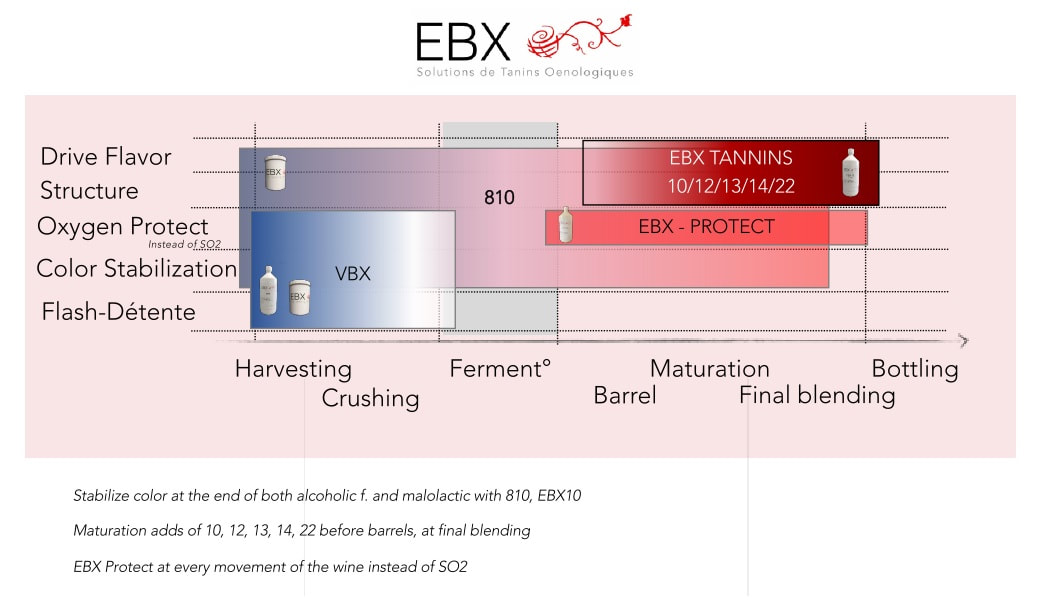
As seen above, the Amedee EBX array of tannins are designed for use in different stages. With harvest right around the corner, please plan to push the envelope and see where products like these can take your wine.

For Whites and Rose': The pure oak tannin, EBX 810 in the juice stage will lock in color, add mouth feel, softness, and preserve the potential for aromatics. On Rose', add 5 – 10gm/hL of EBX 810. On Whites, </= 5gm/hL of EBX 810 does the trick.

For Reds: Add EBX VBX2 Add 80 - 120gm per ton of EBX VBX2 powder to your fresh grapes at harvest. KEEP IT SIMPLE: REHYDRATE AND ADD.
To eliminate green character, extract/ stabilize color, avoid bitterness and post fermentation astringency often associated with seed tannin.
Think of EBX VBX2 (powder) as a High Gallic Acid Equivalent (GAE), a blend of chestnut, grape seed and French oak: this tannin is a radical departure from other brands as the French Oak component softens the sensory and allows aroma development during the fermentation.
Most of the competing fermentation tannins out there have very little (if any) oak. Their profit margin is much higher using other wood-type products. Often adding a bitterness. And then theyre happy to sell another product to fix that.

THE TRIALS:
We've packaged BOTH EBX VBX2 and EBX 810 in 500gm trial bottles for your testing.

List Price is $67.50 for a 500gm bottle of each. That’s about 4+ tons for the EBX VBX2 and 4+ tons of the EBX 810. Buy them both. Together. Use them in this trial. Please plan to share your results, analysis, sensory notes, experience with us.

You will be pleased with the result.

CONTACT US to start your trial.

Shrinking Margins? Time to Ask Us About THIS!

As We Negotiate What Would Be a Fairly Good Year to Be a Supplier in the Wine Industry, We Have Our Challenges.

Forgive me if I sound out of line.

Insert here your way of saying it:
  • Supply Chain Woes
  • Supply Chain Interruption
  • Freight Gouging
  • Lost shipments
  • Damaged Shipments
  • Russia/ Ukraine related precious metals scarcity or uncertainty or energy cost increase, etc.
  • Fuel Surcharges
  • Inflation in general
  • _______________________
Whatever it is- Things are costing you more!

EVERY customer I talk to is complaining about their glass deliveries and prices.

Is it time yet to ask why you aren't looking harder at your packaging expenses?

This isn't a sales gimmick. Seriously. Think about the fact that I can save you several cents per bottle by having you order your closures through ENOTOOLS at manufacturer- direct prices.

I can be as technical or as pragmatic as you need to learn why we sell the best closures you can buy at the most competitive prices.

Please consider me a reference resource for whatever information you need to protect your margins.

Please have your most recent closure invoice handy and call me!

Joe Lutomske
phone

Well Slap My... Nevermind. Hey! Did You Know That There Is a Lab for Testing Your Wine on the East Coast?

I'm Usually Late to the Party-

If you already knew about Imbibe Solutions (est. 2015), I apologize for the bother. Heaven knows that the one place in the winery I am lost is the lab. I have a great deal of respect for female entrepreneurs in general. Let alone when it is one as bright and talented as Audrey Skinner. She has done a fine job recognizing and positioning her business to fill a niche and our customers who learn about the location of her company are delighted. They are in Virginia!

"Imbibe Solutions supplements your quality control program with increased product testing from grapes to bottle, including YAN, sugars and acids, bottle stability, and microbial testing. Tests can be ordered individually, as part of a pre-designed, discounted package, or, we can go one step further and manage your entire quality control program for you." - Audrey Skinner

More Closure Experience, Knowledge, and Options.

A Topic Close to My Heart Is the Closure on a Bottle of Wine.

More Closure Experience, Knowledge, and Options.
I have talked to many, many wine collectors, tourists, tasting staff, bloggers, sommeliers, and servers who know much less about closures than they know about wine itself. Or what's worse? When they know a bunch of stuff that just isn't so.

I'm not faulting them! This is not a critique. It's an observation. It's not their job to be able to intelligently compare and contrast the finer points of each type of closure (it's performance, carbon footprint, marketability, how it's made, etc.) - It's mine! Because Enotools specializes in packaging.


If you want to discuss what your options are for all types of closures, please get in touch. We can talk about all of your options, including the most cost effective, dependable, and highest performing Xpür.

Contact us by clicking here!

Winemaking with Under-Ripe Fruit Before and After Harvest

Common Issues with Under-Ripe Fruit Are Addressed Here.

We are often told that a combination approach to this problem is necessary. There are multiple products and multiple applications.

Let’s look at a reasonable plan first:
Limit the maceration time during the alcoholic phase of fermentation.

Under-ripe grapes often have thicker skins. With unripe and green seed tannins anthocyanins, tannins and aroma precursors will be harder to extract, leaving a green pepper character. This is where we come in.

EBX VBX will protect your skin tannins and maximize your color extraction with limited maceration time. Use 80 – 120gm/ton of the EBX VBX powder, or 150 – 300ml/ton of EBX VBX liquid. Add during initial crushing and destemming, prior to inoculation.
Winemaking with Under-Ripe Fruit Before and After Harvest
EBX VBX Liquid
Winemaking with Under-Ripe Fruit Before and After Harvest
EBX VBX Powder
This lighter extraction regimen may result in lower tannin content and potentially color instability. To protect the skin tannins from precipitating out with the proteins, use EBX 810 powder fermentation tannin just after onset of alcoholic fermentation. Dose rate is 20gm/hL or 120 – 150gm/ton. EBX 810 is pure untoasted French Oak powder from the center of the oak, the highest quality powder available and not blended with other tannin materials. EBX 810 provides color stability and a full mid-body mouth feel, diminishing the green flavors.
After alcoholic and malolactic fermentation, add another 10gm/hL EBX 810 to stabilize the color with the alcohol (aldehydic bridge).

As we are dealing with green character Pyrazines or IBMP (Isobutyl Methoxy-Pyrazine), this IBMP may not be fully metabolized or degraded at this stage of the wine making. The effort now is to mask the perception of this green character while preserving and enhancing the fruity aromas. The primary tools include yeasts derivatives and oak in its various forms.

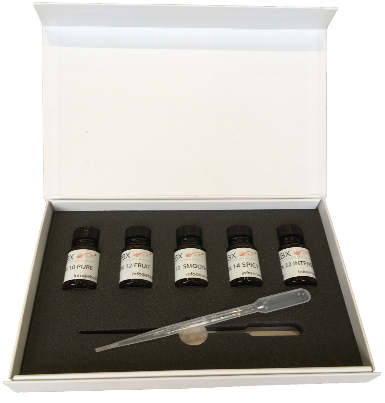
If you are trying to improve a wine already made from Use the EBX Liquid Tannins for bench trials on your affected wines.
Winemaking with Under-Ripe Fruit Before and After Harvest
EBX Liquid Tannin Bench Trial Kit
EBX 14 SPICE can be very effective at a dose rate of 15 – 30ml/hL. If this is too much, reduce the effect by a blend of 75% EBX 14 SPICE and 25% EBX 10 PURE. You may find other proportions effective in similar wines. Do the bench trials and allow up to 10 – 14 days for the full effect.

EBX Tannins by US Amedee, LLC are produced from carefully selected and aged French Oak in France. The extraction is by water at low temperature under pressure, not by high heat or essence collection: only the process that matches the traditional barrel aging.
This is a pure oak tannin, not blended with other woods or materials. The addition takes two weeks to reach full sensory effect, and it remains constant with the natural aging of the wines, brews, ciders and spirits.


Learn More about EBX Tannins

The Great Receiving Hopper Debate

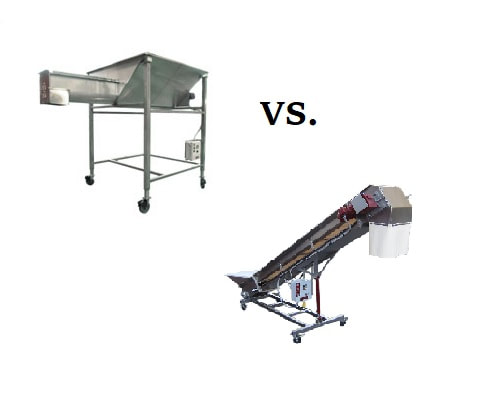
Which Is Better? Incline or Horizontal?

The Great Receiving Hopper Debate

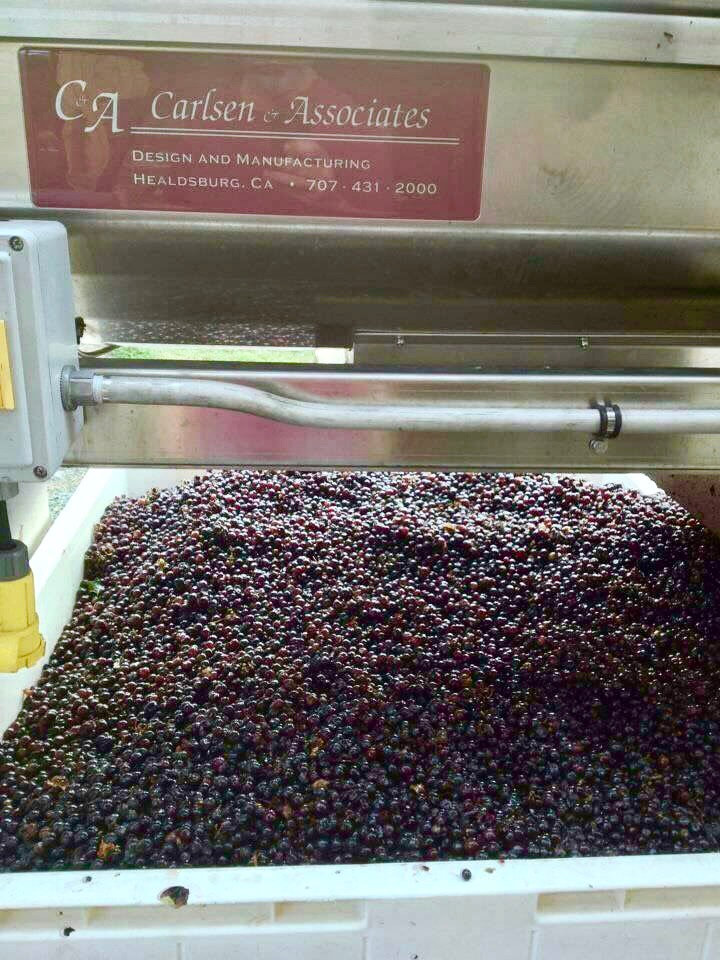
One of the Few Constants in Life: A Metered Feed of Fruit to Your Destemmer Gives the Best Result.

The Great Receiving Hopper Debate

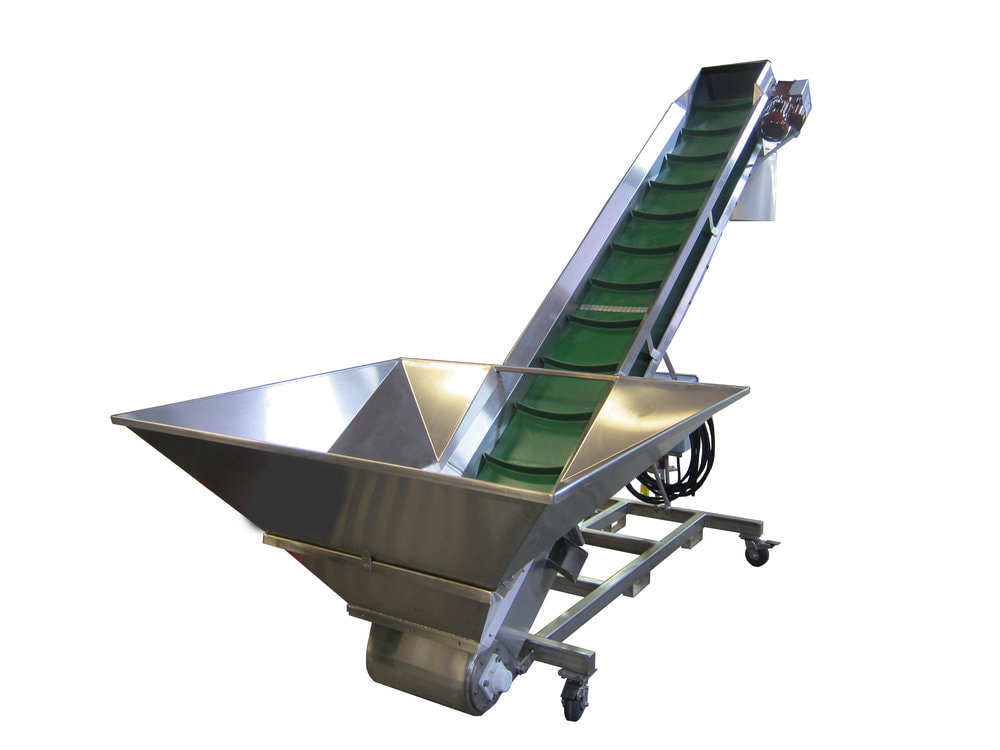
Incline Belt Conveyor with Large Hopper

The Carlsen Incline Belt Conveyor is a popular option for a receiving hopper. It seems that they are theoretically gentler and allow the occasional opportunity to pluck away something you don’t consider usable fruit. “Gentler” is a generalization which does not apply to our Horizontal Receiving Hopper. But when comparing a belt to other auger- type designs, they are gentle.

The Great Receiving Hopper Debate

One thing to remember as you decide on a receiver: This is not true automation.

The best way to use an incline belt conveyor to feed grapes to a destemmer or press is to side tilt a ½ ton bin and take “cleat sized” bites with a food grade rake, matching the tempo of the sound of fruit dropping 10-18” onto the slide of your gravity in-feed Vega 10 destemmer. A similar method could be used to move whole cluster or bin- fermented reds into the press; Provided the heights match up with the built- in adjustable discharge height on the incline. This is not a two- worker crushpad. A third person is needed on the seat of the cup- holder equipped forklift.

The large hopper makes a nice target and keeps the dropped fruit to a minimum. The tank at the bottom of the belt is a good place for a small, low- cost pump (Yamada NDP 25?). The curved cleats on the belt do a good job capturing juice, but free run can get by them.
Storage/ Care/ Cleaning of an Incline is a point of contention for the extra- sanitary winemaker. Is the vineyard clean? No. Neither are these belts after the first use. Ever. You can spray them out, cap the tank, fill it with sanitizer and realistically get to a place where a biologically stable wine will never show that it touched that belt VERY easily. But some winemakers are afraid that wind comes from trees and the boogeyman lives between the belt and the pulley. Storage out of the sun is best. Taking tension off the belt at the end of harvest makes them last longer.
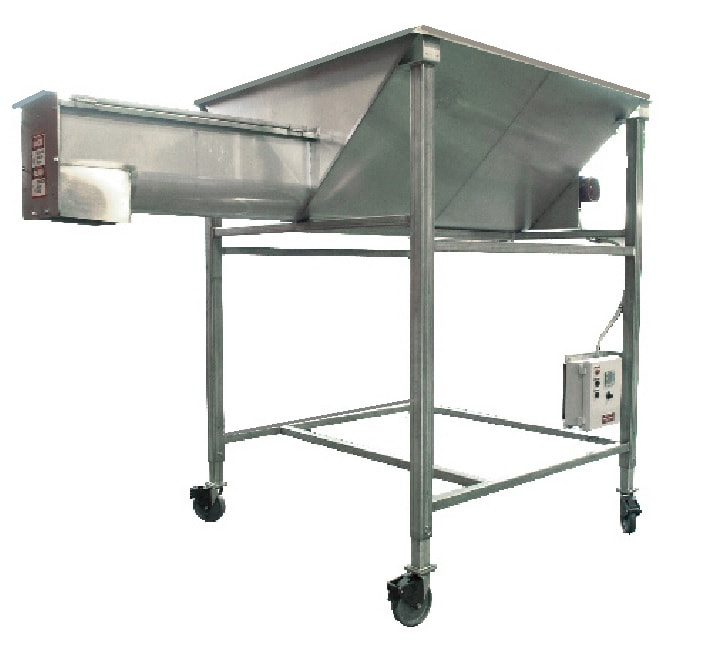
6’ Horizontal Receiving Hopper
The Carlsen 6” Horizontal Receiving Hopper is perfect for receiving ½ ton bins, dumped at will. Cardboard bins from abroad (or some dude) can be problematic, because we hate having folks on ladders. Cardboard bins stapled to a wooden pallet could slide off the pallet, into the hopper in one piece and create a huge delay. The only way to unload them properly with a 6’ is to get up in the air on a ladder and cut the side down and have someone pass you a rake. It takes all of the fun right out of the “dump and run” feature. These are rock star pieces of equipment which save labor and preserve quality IF your fruit is all in a plastic, rotatable bin.
The height is adjustable to allow discharge of whole cluster to press, fermented reds to press, whole cluster to sorting, and fruit to destemmer.
The Great Receiving Hopper Debate

Cleaning is easy. Storage out of the sun is best.
It’s a two- person crushpad if you have one of these.
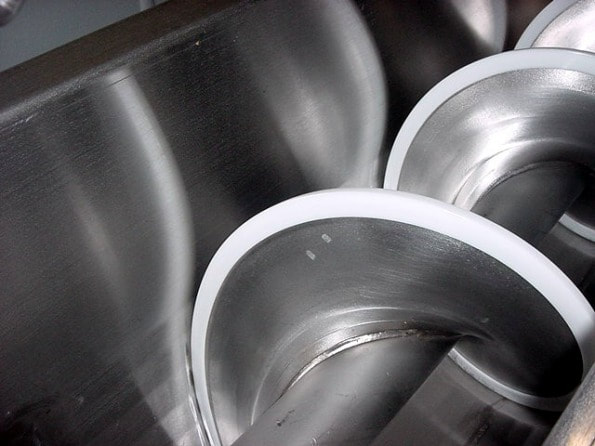
It’s gentle by design. The auger (normally a violent, horrific word to use in the context of grapes) is a seamless, one- piece, contiguously (tig) welded, oversized beauty with U.H.M.W. plastic flight- edging and no end bearing. The shaft floats in the bottom of the trough. The flight edge becomes the bearing. There are no pinch zones. And it seals so well against the bottom that you have to turn it on to get the water to drain out after cleaning.
The Great Receiving Hopper Debate
Please just be aware of the market and know that “Auger” is not synonymous with brutalizing your poor, unsuspecting grapes. Weigh your options. And please pick the receiver which is best for you. I support your decision.

Have Questions?