
Dargaud et Jaeglé ("D&J") 225 to 600 L
Crafted in France. Trusted everywhere. Did you know Dargaud et Jaeglé pioneered water-bent barrel crafting in Beaujolais as early as 1921? Over a century later, their barrels remain true to tradition, respected for meticulous construction and precise oak expression. D&J French oak barrels are carefully matched instruments that complement your unique wines.
Some coopers offer only forest designations, regardless of how climate change may be affecting forest terroir. Others offer grain profiles or some scientific projection of how much tannin is in a stave. As the old saying goes, "you can get four forests from one tree." Somehow, those cooperages still don't match the consistency of D&J and Vallaurine. Consistency matters when you have enough variables year after year. It's best to know what to expect from your barrels.
D&J uses time-tested relationships to source wood from renowned forests, strictly culls it to find the staves that typify each forest, and offers forests, house selections and blends of forests to duplicate exactly the result you expect from that barrel, year after year.
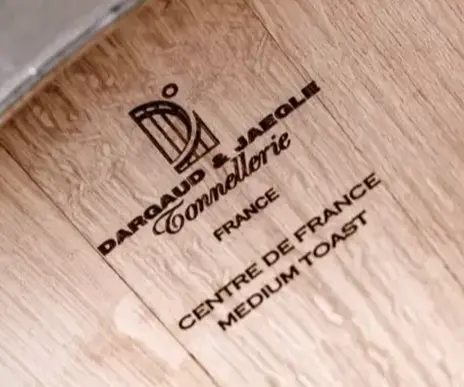
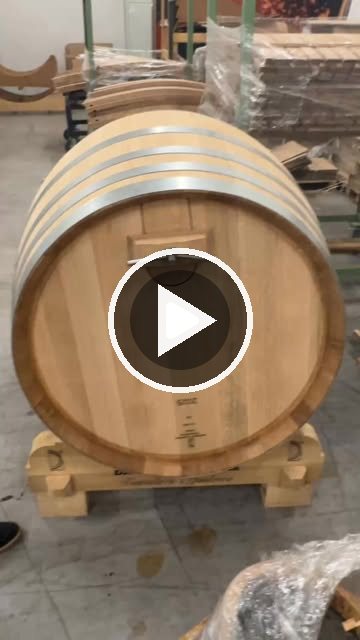
- Crafted in South Burgundy, France
- Wood selected and culled before aging
- Origin-specific wood and house blends
- Water bent, wet toasted for deep, slow toast
- Built by artisans to engineered standards
- Emphasizes fruit, respects structure
- Elevated, elongated finish
- 57 to 600L sizes
D&J barrels are available exclusively in the Eastern U.S. through ENOTOOLS. Let's find the perfect barrel for your next great wine: schedule a barrel consultation.
Vallaurine: The Fire-Bent Classic
Crafted especially for the Jaeglé family from wood aged at the Dargaud et Jaeglé wood yard in Romanèche-Thorins, France, Vallaurine is a new approach: the consistency and expertise of the Jaeglé family, producing the most delicate and respectful French barrel possible using traditional fire bending.
- Rive Droite yields complex, elegant wines with rich texture, preferred for Bordeaux-style wines worldwide.
- Rive Gauche enhances prized aromatics and delicate nuances, on a scale similar to those found in Burgundy.
The Vallaurine range includes standard sizes, casks, demi-muids, foudres and ovals.
Barrel Associates: The American Oak Collection
Barrel Associates ("BA") barrels have been made in Fresno, California since 1993 using a proprietary blend of Minnesota and Missouri wood, with strict quality controls and artisanal manufacturing. Options: water bent, fire bent, and deep toast methods for extended performance, with traditional American barrel impact or subtler, more European impressions.
BA Fire Bent American Oak Barrels are the industry standard for a traditional American barrel. Predictable, reliable, and consistent, this barrel does exactly what convention would expect when you hire it for the job.
BA Water Bent American Oak Barrels are a slightly muted version of what comes to mind with American oak. The process removes any sharp edges or extra assertiveness that you might need for a more bombastic wine. Built for a subtler oak impact, Water Bent American Oak features less lactone, spice, and smoke than a fire bent barrel would.
BA Deep Toast American Oak Barrels are the sneaky cheat. Saturated staves are altered by the deeper migration of the heat from the toasting fire, giving you the performance you would expect from European barrels, without the European price.
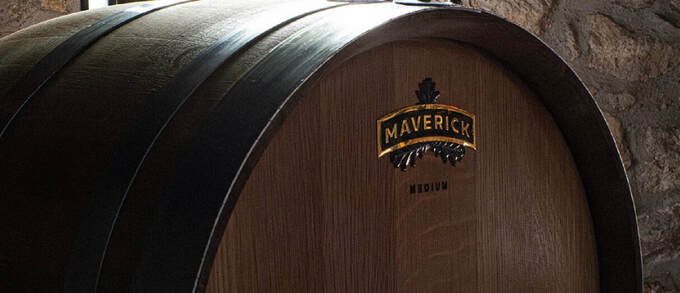
Introducing the Maverick: the last word in American barrels.
Imagine all that is known for excellence in barrel manufacturing available in an American Oak barrel at an American Oak price. These don't just keep up with other barrels. They stand out.
Want to see the difference in numbers? One Napa Valley Merlot was aged in nine Barrel Associates barrels, and an independent lab measured what each one put in the wine: American oak lab analysis (PDF).
Quality controls, options and the Maverick sheet are on the right.
Also in the Barrel Room
TranStore Cooperage stainless steel barrels for sterilizable, forever-lasting storage, D&J oak tanks from 10 to 60HL, and barrel rack density and floor plans for laying out your barrel room. Wondering how you should be cleaning your barrels? See barrel cleaning.
Questions Winemakers Ask About Oak
Which French Oak Forest Best Suits My Chambourcin, Cabernet Franc or Chardonnay?
That depends on the style of wine you're making, and it's a live conversation, not a chart. Tell me about the wine, where you want it to go and how long it gets in barrel, and we'll find the cooperage, forest and toast together. Schedule a barrel consultation or call me at phone.
What Should I Think About When Choosing Barrels?
Start with the wine, not the barrel:
- The type of wine and the varietal
- Where the grapes came from (the AVA)
- The vintage: a good year or a tough one
- The percentage of new oak you want
- How long the wine will age
- The effect you're after
- Your budget. One GREAT barrel beats five crappy ones.
What Is the Sensory Difference Between Allier, Center of France, Vosges and Other Origins?
Honestly? It's subjective. The right pick depends on your stylistic end goal, how much aging time you have, and the basic chemistry and origin of your wine. Remember, you can get four forests from one tree. That's why we taste and talk before anybody sells you a barrel.
When Should I Select American Oak Over French Oak?
Two reasons: budget and style. Barrel Associates has made technical advances beyond the competition, and their American barrels carry no import tariff. In tasting comparisons they perform a lot like French barrels. Don't take my word for it: here's the American oak lab analysis showing what each Barrel Associates barrel gave one Napa Valley Merlot.
A little botany helps. European barrels come from Quercus petraea (cognac and wine barrels) and Quercus robur (mostly wine barrels); American barrels come from Quercus alba. In general, French oak gives more tannin and less lactone, and American oak gives more lactone and less tannin. From most delicate to least, think French, then Hungarian and Eastern European, then American. Within American oak, from least aggressive to greatest: Missouri, Minnesota, then Appalachian. Barrel Associates barrels are made from a blend of Minnesota and Missouri wood.
What Is the Difference Between a 225 L, 300 L and 600 L Barrel in Oak Extraction and Maturation?
First, the sizes. There are two traditional shapes, kinda like the bottles: Burgundy barrels are 228 L and Bordeaux barrels are 225 L. American-style barrels are 265 L. Beyond those there are 300, 400 and 500 L barrels, 110 L half barrels, 500 to 600 L puncheons, and upright or oval casks of 2,500 L and more.
Do the math and the small barrel wins on wood contact. A standard 225 L barrel has about 90 cm² of inside wood surface for every liter of wine (published figures run from roughly 87 to 102). Go bigger with the same barrel shape and the wood per liter drops with the cube root of the volume:
| Barrel | Wood surface per liter | Flavor infusion potential vs. 225 L | Total inside wood surface |
|---|---|---|---|
| 225 L | about 90 cm²/L | 100% | about 2.0 m² |
| 300 L | about 82 cm²/L | about 91% | about 2.5 m² |
| 500 L | about 69 cm²/L | about 77% | about 3.5 m² |
| 600 L | about 65 cm²/L | about 72% | about 3.9 m² |
That's the starting point, not the whole story. A bigger barrel also lets in less oxygen per liter, so the wine matures slower and holds onto its fruit. Stave thickness, toast, cellar temperature and time all move the needle too.
And every barrel gives less each time you fill it. In one published comparison, French oak tannin dropped from over 140 mg/L on the first fill to under 80 mg/L on the second, more than 40% gone. American oak went from about 50 to about 35 mg/L, roughly 30% (Yair Margalit, Concepts in Wine Chemistry, as reported in WineMaker magazine). Most commercial wineries call a barrel neutral after four to six years.
How do I choose a toast level?
Think about a wine the way an artist thinks about composition. Painters and photographers use the rule of thirds to balance a picture; you can read a wine left to right the same way: the nose, the mid-palate, the finish. The fruit or oak you smell predicts what you'll taste.
Now lay the toast scale out left to right too: untoasted and light toast on the far left, heavy toast on the far right.
- Left (light toast): supports the fruit. If the wine needs a fruit boost, stay light.
- Middle (medium): a little oak in the nose, plus structure and mid-palate support.
- Right (medium plus and heavy): sweetness, oak aroma and a longer, less abrupt finish.
Decide where the wine is lacking, and fill it in.
What the toast levels taste like: toasting is slow, deep heating over fire, not the same as charring.
- Light and medium toast: lighter flavors, like light caramel, sweet spices and light vanilla. Subtle. It frames the picture of the fruit in the nose.
- Medium plus and heavy toast: darker flavors, like cocoa, coffee and heavy wood smoke. Strong. More wood in the nose: bread, graham cracker.
- Slow, deep or long toasts penetrate the wood further, caramelizing, sweetening and softening the harsher flavors away. They enhance and lengthen the finish and make it silky and linear.
Heads are usually left untoasted, but you can specify toasted heads ("TH"). Most American oak barrels come with toasted heads. The quality of the wood, how it's culled and how long it's seasoned can decide how much toast a barrel needs.
For French barrels, treat these as rules of thumb: toast names aren't standardized from one cooper to the next. And details beyond toast matter. In our American oak lab analysis, nine barrels, all medium plus toast, held the same Merlot, yet smoky guaiacol still ranged from 18 to 45 µg/L and vanillin from 333 to 507, depending on how the staves were bent and seasoned. Taste the actual barrel, or let us set up a comparison.
How Long Should My Wine Stay in Barrel?
Think about two clocks running at once:
- Extraction is how long it takes the wine to absorb the essence of the barrel. It's faster from staves that were seasoned longer, and more potent from tighter grain wood.
- Integration is how long it takes that essence to become part of the wine. Looser grain integrates faster, and so does a rack and return. Integration needs oxygen, the slow micro-oxygenation a barrel provides.
The wine is ready when both clocks have run out. Taste it often.
Can I Approximate My Target Barrel Profile Using Staves and Finishing Tannins?
Yes. Staves, inserts, chips and finishing tannins can rebuild a lot of what a new barrel gives, or wake up a barrel that's past its prime. The dosage figures are on our EBX tannins and oak alternatives page and in the EBX section of the Cellar Calculator. Amedee's Oak Dosage Simulator works too, and their Barrel Diagnostic tells you what your used barrels still have left.
How Do I Compare Oak Cost per Gallon of Wine Over Several Vintages?
With math. Divide what the barrel costs by all the wine it'll hold over its working life. American oak runs roughly half the price of French, so fill for fill, it's about half the cost per gallon. French barrel pricing is available on request: Get a Price. Then plug your quote in here: