
So You Wanna Start a Winery?
If nobody has yet been successful in talking you out of it, Congratulations! You are starting a winery! First and foremost, contact us with your email and phone number so that we may know who is calling down the road when you are looking for equipment, tanks, barrels, supplies or information. Subscribe to the ENOTOOLS UNIVERSITY podcast. Next, download this document to keep handy when converting tons of grapes to bottles of wine. You will need it when you are ordering supplies and winery equipment. It will help you plan wine tank sizes, number of wine barrels needed, wine bottles needed, how many wine corks and capsules to order, etc.
Turning the light of the sun into the shimmer in the glass is a very romantic pursuit. I live this experience vicariously, thanks to our customers. And our office has been home to a few interesting "hobby winemaker" projects. It has become apparent to this supplier that this pursuit will simultaneously satisfy the core of your being and torture your mortal soul. Well, sort of.
Do you plan to hire the winemaker or make the wine yourself? Are you already making wine, but need to get a little better at it? One tremendous resource for learning more about making wine is VESTA. This is a way to keep your day job and become a Winemaker on your schedule. You should also consider the various colleges and universities in your area if time permits. Contact your local winery and ask to be a free intern to bring your level of familiarity with a bucket, scrub brush, and hose up to speed before you take the plunge.
How do I start a winery?
I would start a folder under the bookmarks tab on your computer and bookmark a link to our home page.
Learning how to start a winery from those who have gone before you is priceless. Talk to the neighbors. Observe the experts. And beware the conspiracy for mediocrity. On the one hand, take note of methods and machines while considering the law of large numbers. On the other, if it saves labor, preserves or increases quality, or saves time and money- it may be a good idea to copy someone else. If it looks like a really complicated way to provide a solution without a problem, avoid it. If you want to make better wine than your neighbors, start with good fruit; Then don't ruin it. Keep it clean and relaxed. Do it with love. It will work!
There are four traditional ways to start a winery:
1. Inherit one
Marry well, divorce well, or pick a great family to be born into.
CAUTION: Those who marry for money earn every cent. It is better to surround oneself with charming, wildly successful, unusually talented, single people and wait until you fall in love with one.
2. Buy one
(self explanatory). Check our classifieds page for listings.
If you have the cash for this, beware of friends trying to marry you.
3. Plant (or own) a vineyard.
This is NOT a cliche', "Great wine is made in the vineyard." Prove me wrong.
Start by growing grapes. Make friends with a Vineyard Consultant to get you off on the right row. Plant the best vines for your property from the beginning. And plant them in such a way that the vineyard will be profitable.
Be warned, growing wine grapes is truly a partnership with Mother Nature. It is best to start off on her good side. Don't try to tell her what grows where. She eventually wins every time. It won't take long for her to figure out that you are trying to grow Syrah in Manitoba. Don't do it!
There are many resources available to you when looking to start a vineyard. The number of questions relevant to site selection, soil conditioning, aspect, varietal compatibility, rootstock or nursery stock selection, spacing, trellising, canopy management, pest potential, disease prevention or treatment, etc. is seemingly limitless. Many people consult academia prior to buying anything. Your state or regional resources for agriculture are probably more helpful than you imagine. This does not preclude the need for asking an expert what to do to align your vineyard with your planned harvest method.
The vineyard is already planted? Sell fruit starting in year three, use the money from the fruit to show revenue, then:
A. Borrow a ton of money and build the perfect winery (with a perfect crushpad) next to the vineyard. Take advantage of all that the site has to offer. Wind a meandering path from the road through the vineyard to reveal the best perspective of the property. Remember the excitement you have when you get out of the car at a winery. Imagine those days when you were wine tasting and to restrain yourself to keep from running into the tasting room. Be that for someone else!
Think in advance about the old concept that it is cheaper to build up than to build out during new construction. Take advantage of gravity feed whenever possible. The tourists love that. And plan for clearance overhead. Tall ceilings are not just for tall people.
-or-
B. Use a more humble retail location and pay a neighbor to make wine for you out of your grapes.
4. Open a Storefront Winery.
Focus on Retail Wine Sales First.
Live and breathe the singular goal of selling your story, your label, and your passion. If you start with a genuine, palpable love for wine with your name on it, and if it's good- you will succeed; See: Kosta Browne. Plan B is "See plan A".
-Then be a destination.
Get a fantastic location, plant two rows of vines for scenery. Get product on the shelf by having a neighbor make some of their wine for you until you can gradually undertake more and more of the production work. Keep this going while margins on retail wine sales increase to the point that the capital investment for process equipment is justified.
You would buy your fruit in this model. Why not put the growers' names on the labels? This is industry is synergistic by nature. And its the only one where competition helps everyone. Maybe start by bottling at home, then fermenting at home, then doing crush at home. This is when you will need all those shiny things. But remember: Don't feel obligated to buy a huge, automated bottling line unless you have no way of hiring a mobile bottler or having your wine bottled for you elsewhere.
Any path that leads to starting a winery must start at building a business plan. In the spreadsheet sense, that takes about 16 hours; if you're good. The part that will take more time than anything else (other than actually running the winery and doing the WORK), is toiling over what equipment and barrels and tanks and refrigeration and pumps and hardware to use to reduce the initial capital expense. In all seriousness, read this page on our site called "How to Buy Winery Equipment". You will find that buying it right the first time is a decision you need to make. That said, you will endure the torture of licensing as well. Please contact Patty McRitchie for help on that.
All reliable sources say that it takes up to seven years to enter profitability.
5. What? You didn't know there was a 5?
Contact joe@enotools.com and ask about a turn- key winery. You bring the money and the vision. We'll do the rest. We know literally everyone. We could play quarterback and let people who know how to design and build a winery do what they do. You just walk in and pop a cork when it's done.
Some hints for profitability:
Turning the light of the sun into the shimmer in the glass is a very romantic pursuit. I live this experience vicariously, thanks to our customers. And our office has been home to a few interesting "hobby winemaker" projects. It has become apparent to this supplier that this pursuit will simultaneously satisfy the core of your being and torture your mortal soul. Well, sort of.
Do you plan to hire the winemaker or make the wine yourself? Are you already making wine, but need to get a little better at it? One tremendous resource for learning more about making wine is VESTA. This is a way to keep your day job and become a Winemaker on your schedule. You should also consider the various colleges and universities in your area if time permits. Contact your local winery and ask to be a free intern to bring your level of familiarity with a bucket, scrub brush, and hose up to speed before you take the plunge.
How do I start a winery?
I would start a folder under the bookmarks tab on your computer and bookmark a link to our home page.
Learning how to start a winery from those who have gone before you is priceless. Talk to the neighbors. Observe the experts. And beware the conspiracy for mediocrity. On the one hand, take note of methods and machines while considering the law of large numbers. On the other, if it saves labor, preserves or increases quality, or saves time and money- it may be a good idea to copy someone else. If it looks like a really complicated way to provide a solution without a problem, avoid it. If you want to make better wine than your neighbors, start with good fruit; Then don't ruin it. Keep it clean and relaxed. Do it with love. It will work!
There are four traditional ways to start a winery:
1. Inherit one
Marry well, divorce well, or pick a great family to be born into.
CAUTION: Those who marry for money earn every cent. It is better to surround oneself with charming, wildly successful, unusually talented, single people and wait until you fall in love with one.
2. Buy one
(self explanatory). Check our classifieds page for listings.
If you have the cash for this, beware of friends trying to marry you.
3. Plant (or own) a vineyard.
This is NOT a cliche', "Great wine is made in the vineyard." Prove me wrong.
Start by growing grapes. Make friends with a Vineyard Consultant to get you off on the right row. Plant the best vines for your property from the beginning. And plant them in such a way that the vineyard will be profitable.
Be warned, growing wine grapes is truly a partnership with Mother Nature. It is best to start off on her good side. Don't try to tell her what grows where. She eventually wins every time. It won't take long for her to figure out that you are trying to grow Syrah in Manitoba. Don't do it!
There are many resources available to you when looking to start a vineyard. The number of questions relevant to site selection, soil conditioning, aspect, varietal compatibility, rootstock or nursery stock selection, spacing, trellising, canopy management, pest potential, disease prevention or treatment, etc. is seemingly limitless. Many people consult academia prior to buying anything. Your state or regional resources for agriculture are probably more helpful than you imagine. This does not preclude the need for asking an expert what to do to align your vineyard with your planned harvest method.
The vineyard is already planted? Sell fruit starting in year three, use the money from the fruit to show revenue, then:
A. Borrow a ton of money and build the perfect winery (with a perfect crushpad) next to the vineyard. Take advantage of all that the site has to offer. Wind a meandering path from the road through the vineyard to reveal the best perspective of the property. Remember the excitement you have when you get out of the car at a winery. Imagine those days when you were wine tasting and to restrain yourself to keep from running into the tasting room. Be that for someone else!
Think in advance about the old concept that it is cheaper to build up than to build out during new construction. Take advantage of gravity feed whenever possible. The tourists love that. And plan for clearance overhead. Tall ceilings are not just for tall people.
-or-
B. Use a more humble retail location and pay a neighbor to make wine for you out of your grapes.
4. Open a Storefront Winery.
Focus on Retail Wine Sales First.
Live and breathe the singular goal of selling your story, your label, and your passion. If you start with a genuine, palpable love for wine with your name on it, and if it's good- you will succeed; See: Kosta Browne. Plan B is "See plan A".
-Then be a destination.
Get a fantastic location, plant two rows of vines for scenery. Get product on the shelf by having a neighbor make some of their wine for you until you can gradually undertake more and more of the production work. Keep this going while margins on retail wine sales increase to the point that the capital investment for process equipment is justified.
You would buy your fruit in this model. Why not put the growers' names on the labels? This is industry is synergistic by nature. And its the only one where competition helps everyone. Maybe start by bottling at home, then fermenting at home, then doing crush at home. This is when you will need all those shiny things. But remember: Don't feel obligated to buy a huge, automated bottling line unless you have no way of hiring a mobile bottler or having your wine bottled for you elsewhere.
Any path that leads to starting a winery must start at building a business plan. In the spreadsheet sense, that takes about 16 hours; if you're good. The part that will take more time than anything else (other than actually running the winery and doing the WORK), is toiling over what equipment and barrels and tanks and refrigeration and pumps and hardware to use to reduce the initial capital expense. In all seriousness, read this page on our site called "How to Buy Winery Equipment". You will find that buying it right the first time is a decision you need to make. That said, you will endure the torture of licensing as well. Please contact Patty McRitchie for help on that.
All reliable sources say that it takes up to seven years to enter profitability.
5. What? You didn't know there was a 5?
Contact joe@enotools.com and ask about a turn- key winery. You bring the money and the vision. We'll do the rest. We know literally everyone. We could play quarterback and let people who know how to design and build a winery do what they do. You just walk in and pop a cork when it's done.
Some hints for profitability:
- Keep salary expenses down by using interns and volunteers. People love wineries. Harvest helpers can be free and even somewhat handy. Festival volunteers are typically easy to get with facebook status updates and twitter tweets.
- Offer a share of ownership after several years to key people as a way to make your compensation package appealing and help retain staff- avoid re-training.
- Buy used big- dollar items when you can support them locally. Buy new when you cannot. The warranty will serve you well.
- Common ("Cheap") bottles. This will enable less change parts in bottling, normal, off- the- shelf capsules, corks, less freight charges for the lighter glass, etc.
- Put quality in the bottle. The real cost of what is in the bottle of wine goes beyond what grapes, corks, marketing, labor, etc. cost. It is roughly double that if you consider the time value of your money and the opportunity cost of your career. Wine well made is time well spent. Live up to the expectation of the vineyard.
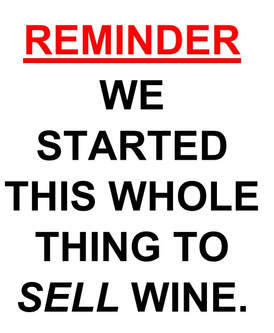
- Put a nice label and a nice capsule over your natural/ natural- based closure. Don't agree? Here is where you will find a compelling argument.

| reminder.pdf |
There are many different stages and stations in life which lead to winery ownership. And somewhere along the way, you will notice that there are many suppliers out there who offer what you want and only a few who know what you need.
Your experience with vendors in the wine industry should be more like marriage or long term friend with benefits and less like college dating. The more a vendor knows about your operation, the more time and money we can save you. This is not to imply that what we sell should be cheap. What you pay for is the total experience of knowing that you bought what your business needs, got what you expected, and didn't sacrifice a thing.
If you would like to put us to the test, you can ask us about packaging, barrels, oak alternatives, corks, destemmers, presses, pumps, hoses, and even things we don't sell; because we know who does. We can also help you with tanks, ozone, barrel washing, , etc.
In so many words, ENOTOOLS is the comprehensive resource for commercial winery businesses east of The Rockies; On a minimally limited basis.
Have a great day!
Your experience with vendors in the wine industry should be more like marriage or long term friend with benefits and less like college dating. The more a vendor knows about your operation, the more time and money we can save you. This is not to imply that what we sell should be cheap. What you pay for is the total experience of knowing that you bought what your business needs, got what you expected, and didn't sacrifice a thing.
If you would like to put us to the test, you can ask us about packaging, barrels, oak alternatives, corks, destemmers, presses, pumps, hoses, and even things we don't sell; because we know who does. We can also help you with tanks, ozone, barrel washing, , etc.
In so many words, ENOTOOLS is the comprehensive resource for commercial winery businesses east of The Rockies; On a minimally limited basis.
Have a great day!